Food Needs vs Energy Needs
- CentralVirginiaFarmer
- May 26
- 3 min read
There is rarely a choice of this magnitude, that is all good or all bad. And there will always be the land of unintended consequences in making those choices.
This country has always been blessed in many ways, but certainly in the fact that we had more land and other natural resources than we had good ideas to use that land.
Our abundance of land and fresh water as a resource is fast turning a corner where every choice will have lasting outcomes in other areas. When we make this choice for land use, there is that other consequence that shows up. Sometimes in far away places that we don’t even realize.
When we make our food and fiber compete for the exact same land as our energy there will be unexpected challenges.
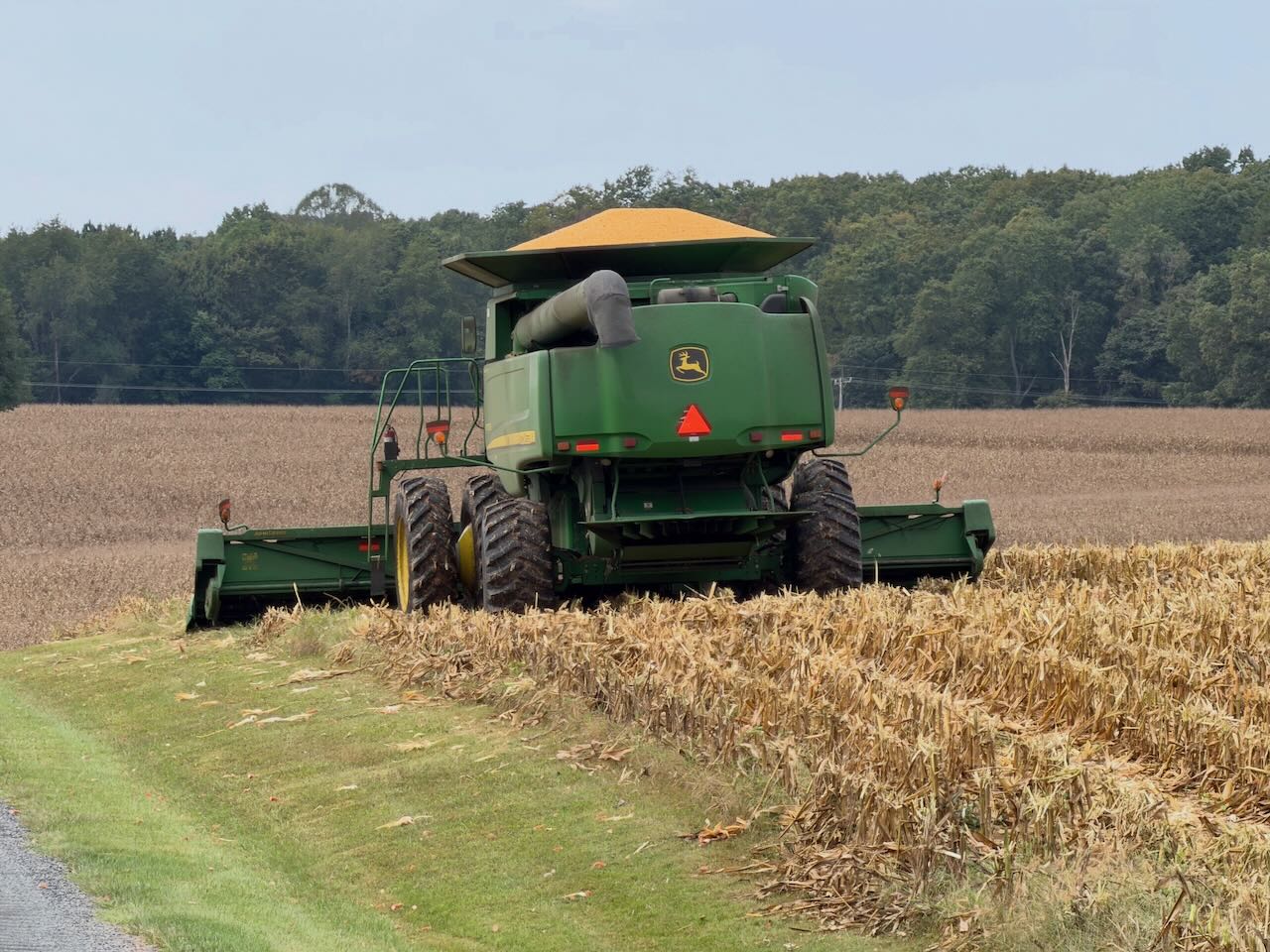
We operate a family farm in Virginia. We grow corn, soybeans, wheat, beef cattle, hay, straw, and timber on around 5,000 acres of well-developed commonwealth agriculture land that belongs to our family and many other landowners.
Our farm operation employs two full time family members, one full time employee, and two seasonal people.
As in most industries we have our own language to communicate what we do. As in most industries, that creates a sizable barrier to others understanding exactly what that represents. We talk about bushels of corn, soybeans, and wheat and head of cattle for our communication purposes. The disconnect from the consumer is in the language we speak.
All those bushels and heads can be converted to calories. Most scientists agree that a normal adult daily consumption of calories should be 2,000 calories per day. When our bushels of grain and head of cattle are converted to calorie our family farm produces and ships to market every year, enough calories to feed 44,100 adult people 2,000 calories per day for full year. For reference, the population of Orange County is 41,000, Louisa County is 42,500, Culpeper is 58,500. Our farmland is mainly in these counties.
We also produce several thousand bales of hay that will feed many pleasure animals such as horses’ sheep and goats, as well as several thousand bales of straw for use in the erosion control for construction and landscaping which helps maintain and promote water quality for Virginia.
When energy companies that have unlimited budgets, given to them by federal government mandates and laws, compete for the limited land resources, the energy companies will always win the battle for land. When data centers who seem to have a limitless supply of money to buy land and influence local governments, who ultimately control land use in their county or city, will also always win.
What happens to our food supply when agriculture cannot afford to compete in the marketplace for the land? Or we literally get moved off our land by the power given to those power companies by our government, in the name of public good.
Our family farm operation is in the shadows of the worlds largest data center complexes. That puts us in a direct line for the electric power lines that the data centers must have to operate. How much of our food and fiber assets are we willing to give up providing energy for data?
To be fair, to produce that amount of food stuffs for consumption with as little labor as possible require energy and the things that data provides. Things like GPS, auto steer for equipment, electronic yield records for making improvements to our production, as well as strong national defense for the protection of everyone. There is no one size fits all answer. We need them all, food, energy, and data. It cannot be a one-sided decision. There are many stake holders and the value they bring needs to be recognized.
As a human being on this planet, it is inherently a bad idea to make your food needs compete against your energy needs when there are options.


Comments